

Drawn Evidence™
Complete Access
Phase 1 — Visual Investigation, Forensic Sketching & Field Safety Foundations
Build the visual and field foundations of civilian investigation: disciplined observation, forensic sketching, visual documentation, threat awareness, and field-ready case preparation.
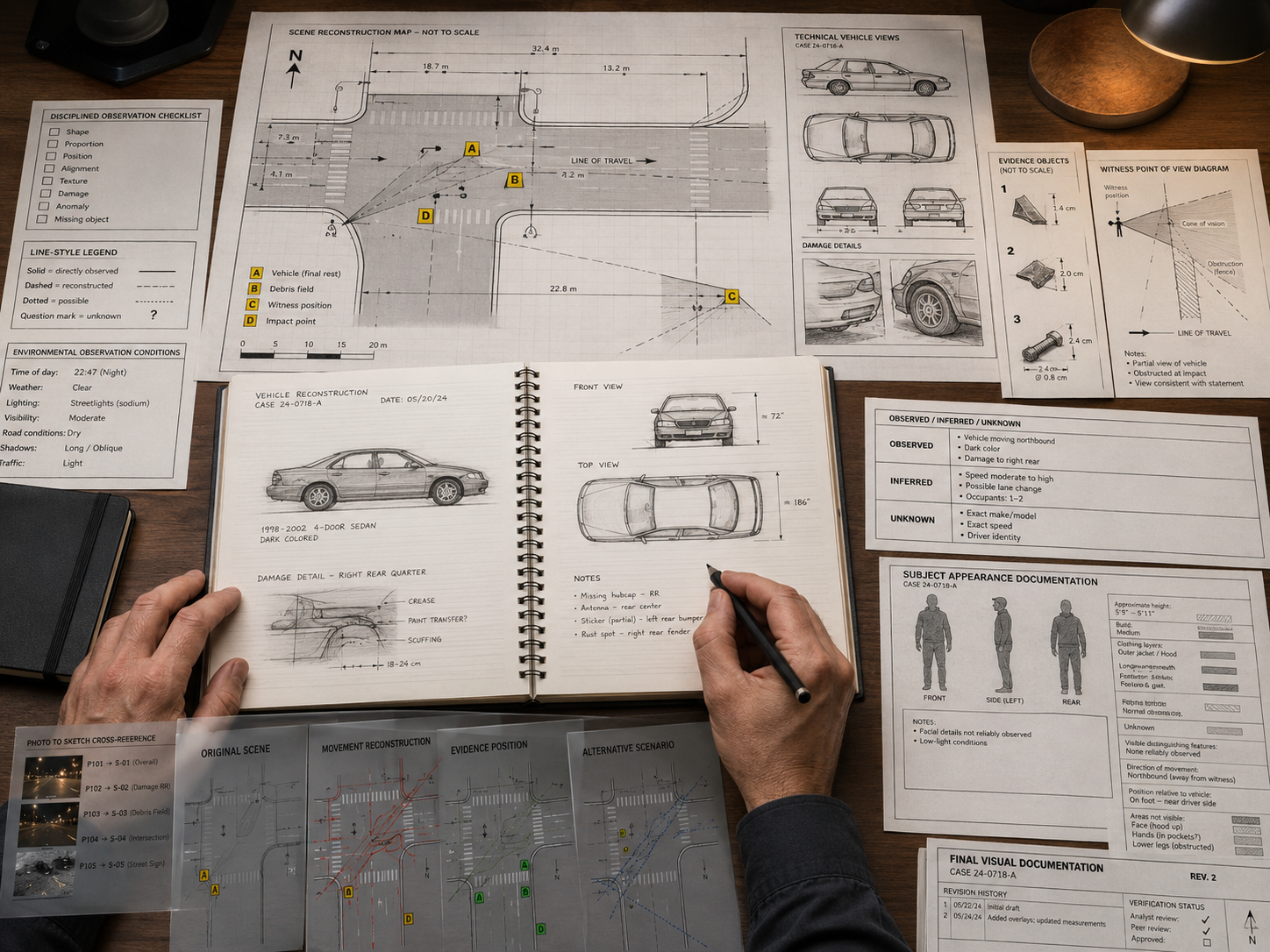
Forensic Sketching: Build Visual Case Reconstruction Maps
Slow perception down, separate direct observation from inference, and turn memory, space, chronology, and uncertainty into an auditable visual record.
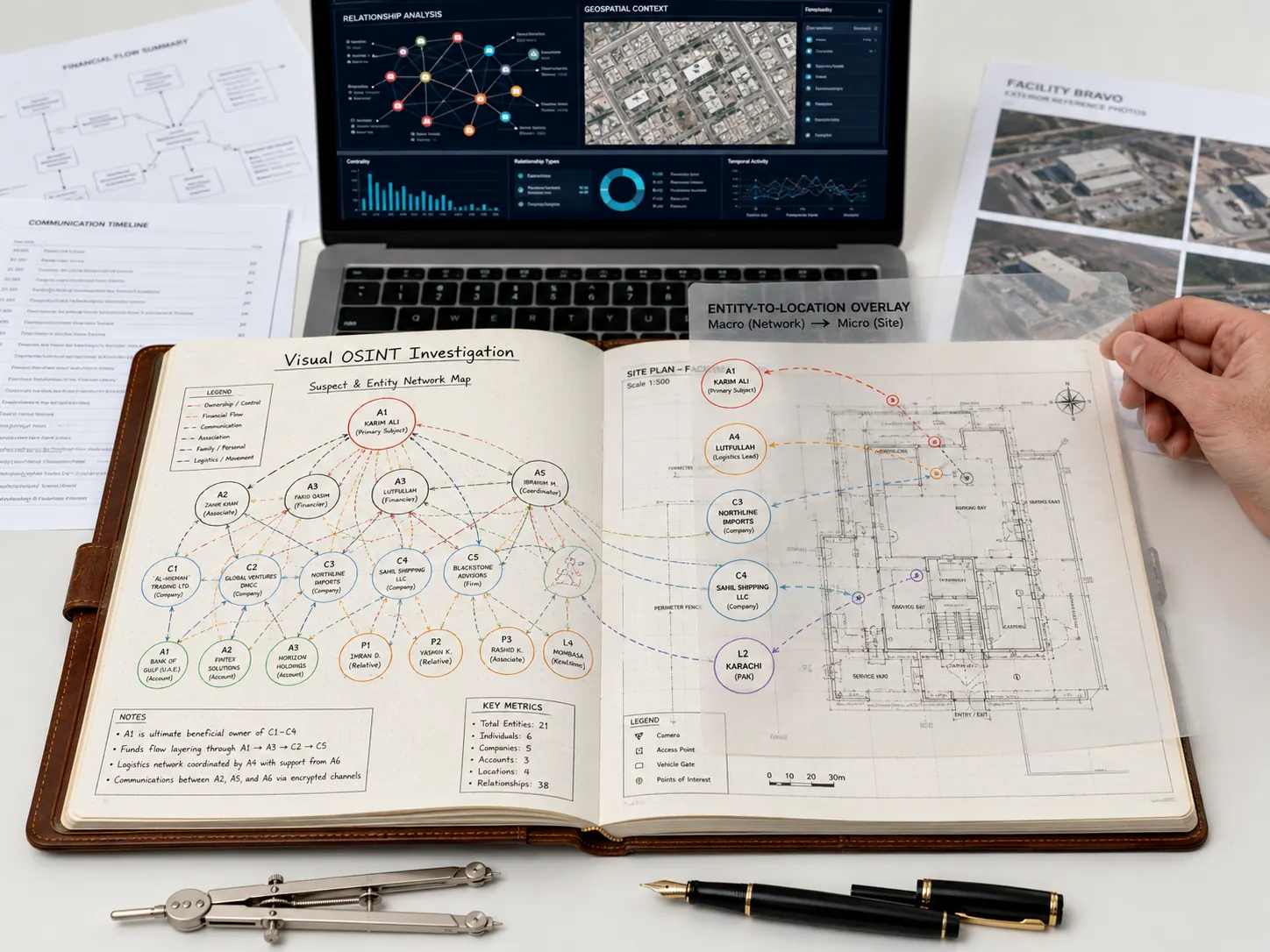
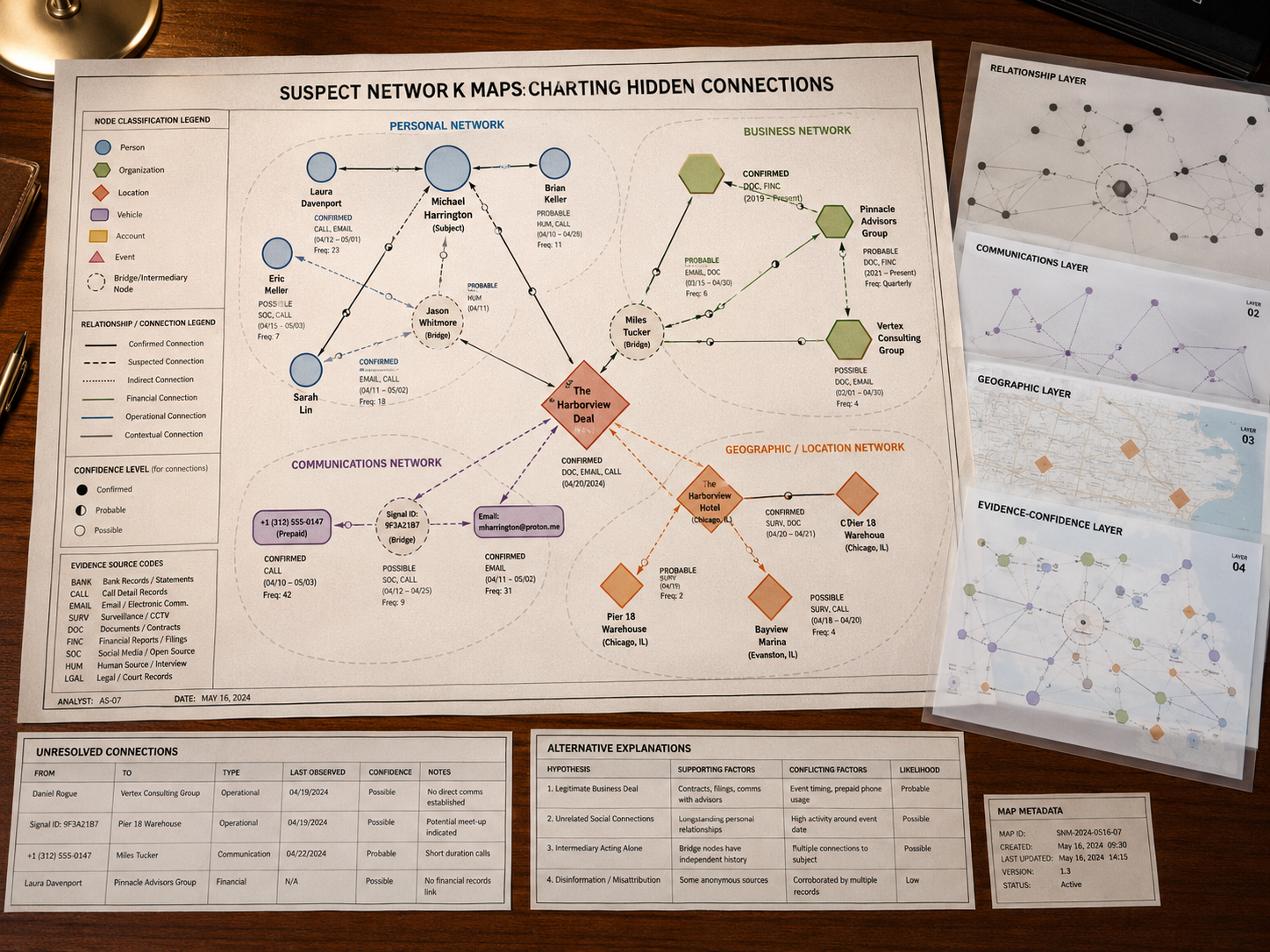
Get Complete AccessSuspect Network Mapping: Charting Hidden Connections
Build relationships from documented nodes and edges, then use layers to make brokers, buffers, repeated structures, and missing links visible without converting proximity into guilt.
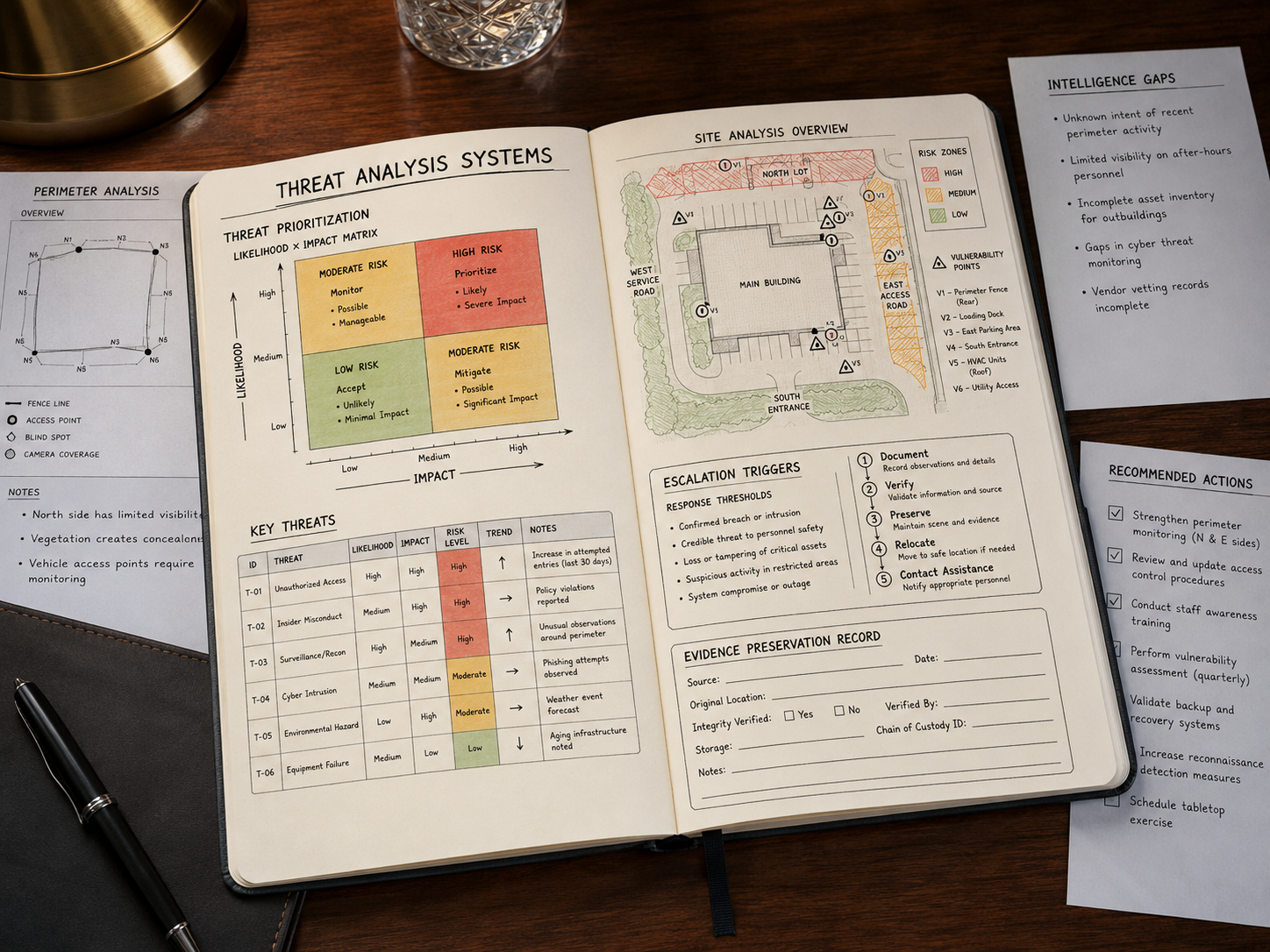
Get Complete AccessThreat Recognition: Analyze Covert Methods & Build Protective Documentation
Train baseline awareness and pattern documentation using safe visual analysis, without building functional weapons or operational mechanisms.
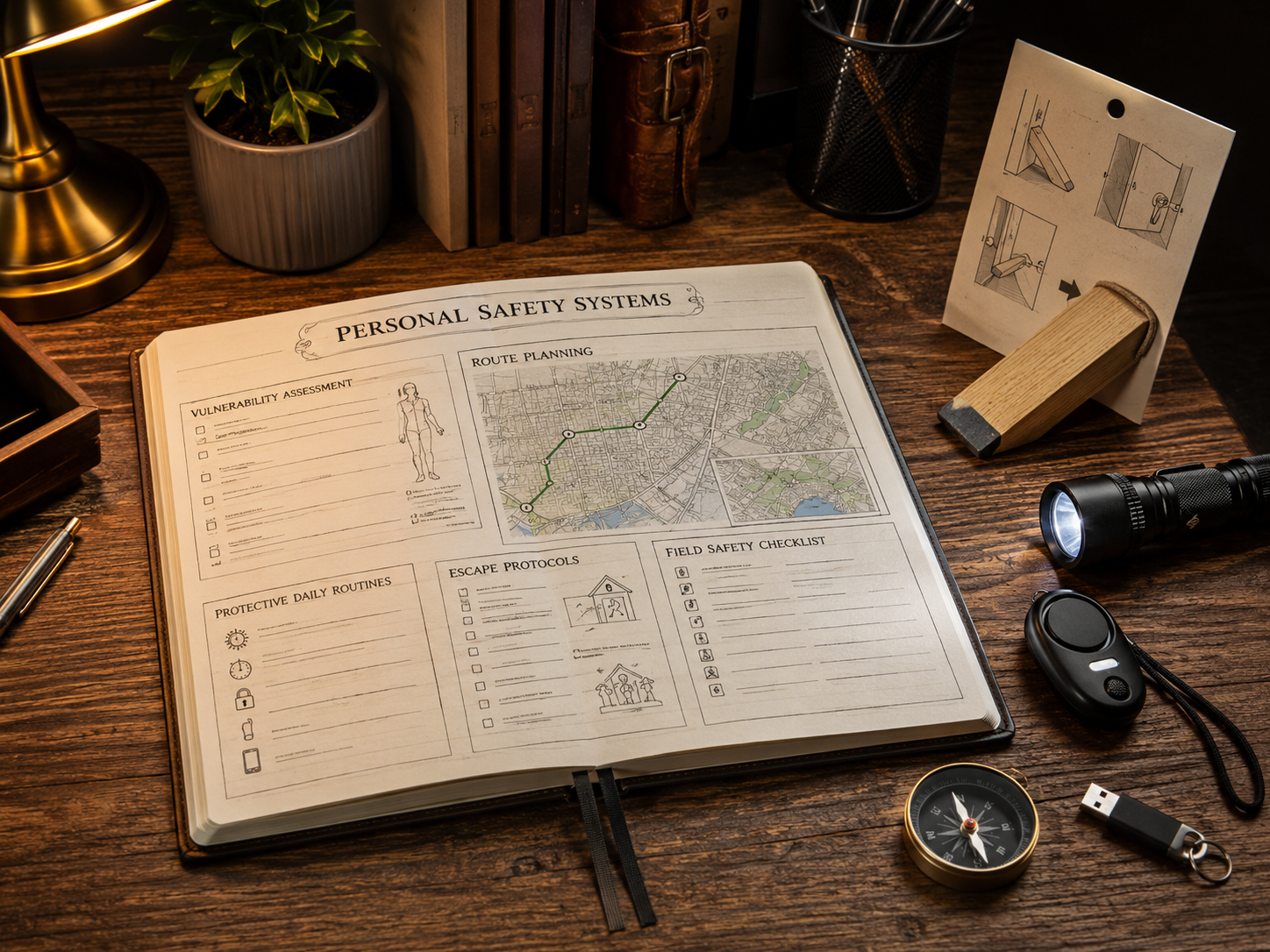
Get Complete AccessBuild Personal Safety, Home Hardening & Escape Systems
Make physical vulnerability and escape planning visible, and build safer habits around ordinary commercially available safety tools without presenting any setup as a guarantee.
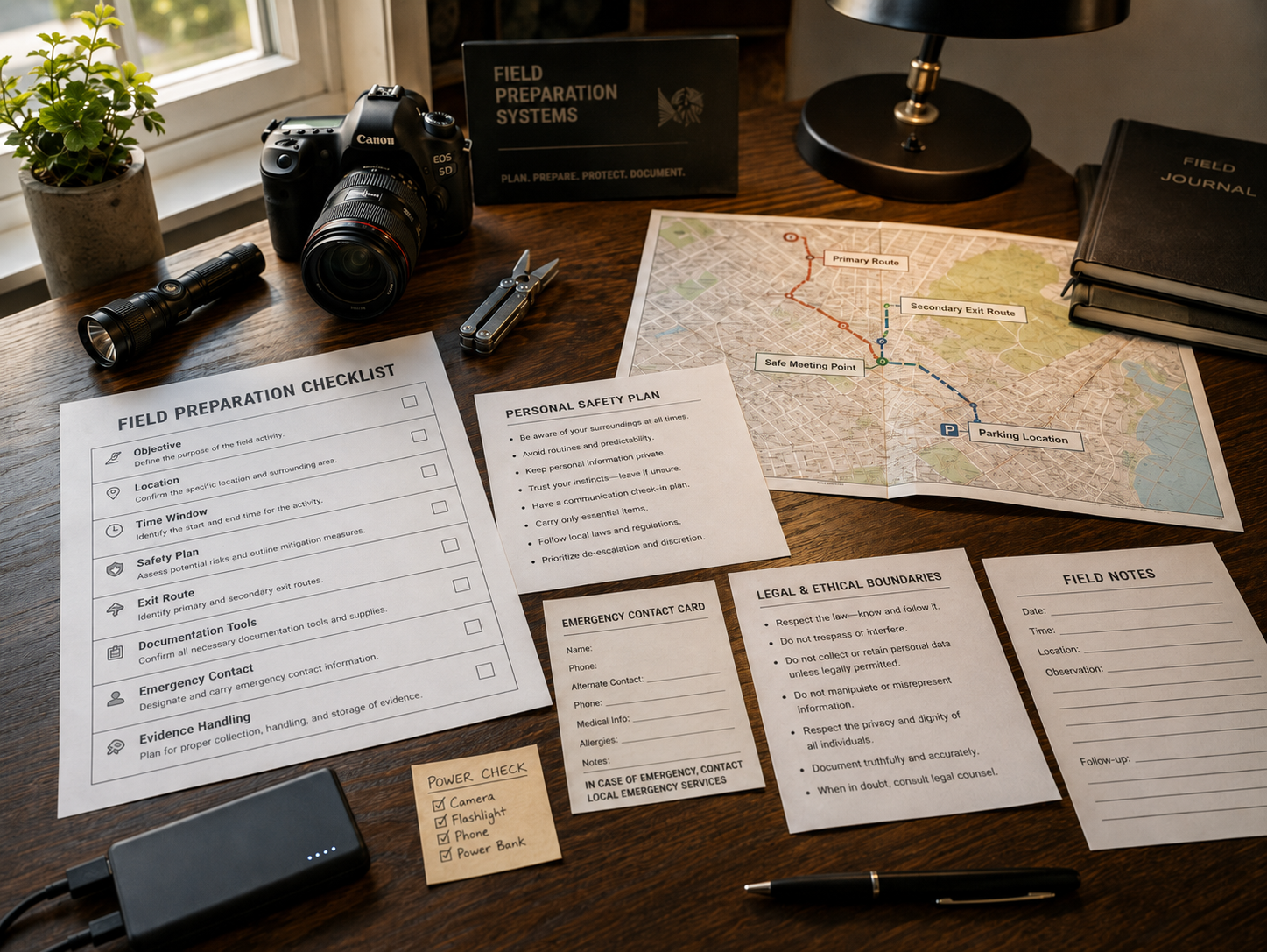
Get Complete AccessBuild a Field-Ready Investigation & Evidence Documentation Kit
Build a quiet, low-profile documentation system from actual needs: every item earns its place, protected materials stay separated, and disengagement rules are explicit.
Get Complete AccessPhase 2 — Digital Intelligence, OSINT Training & Criminal Network Mapping
Build digital intelligence workflows for open-source research, online evidence capture, social media intelligence, and criminal network mapping.
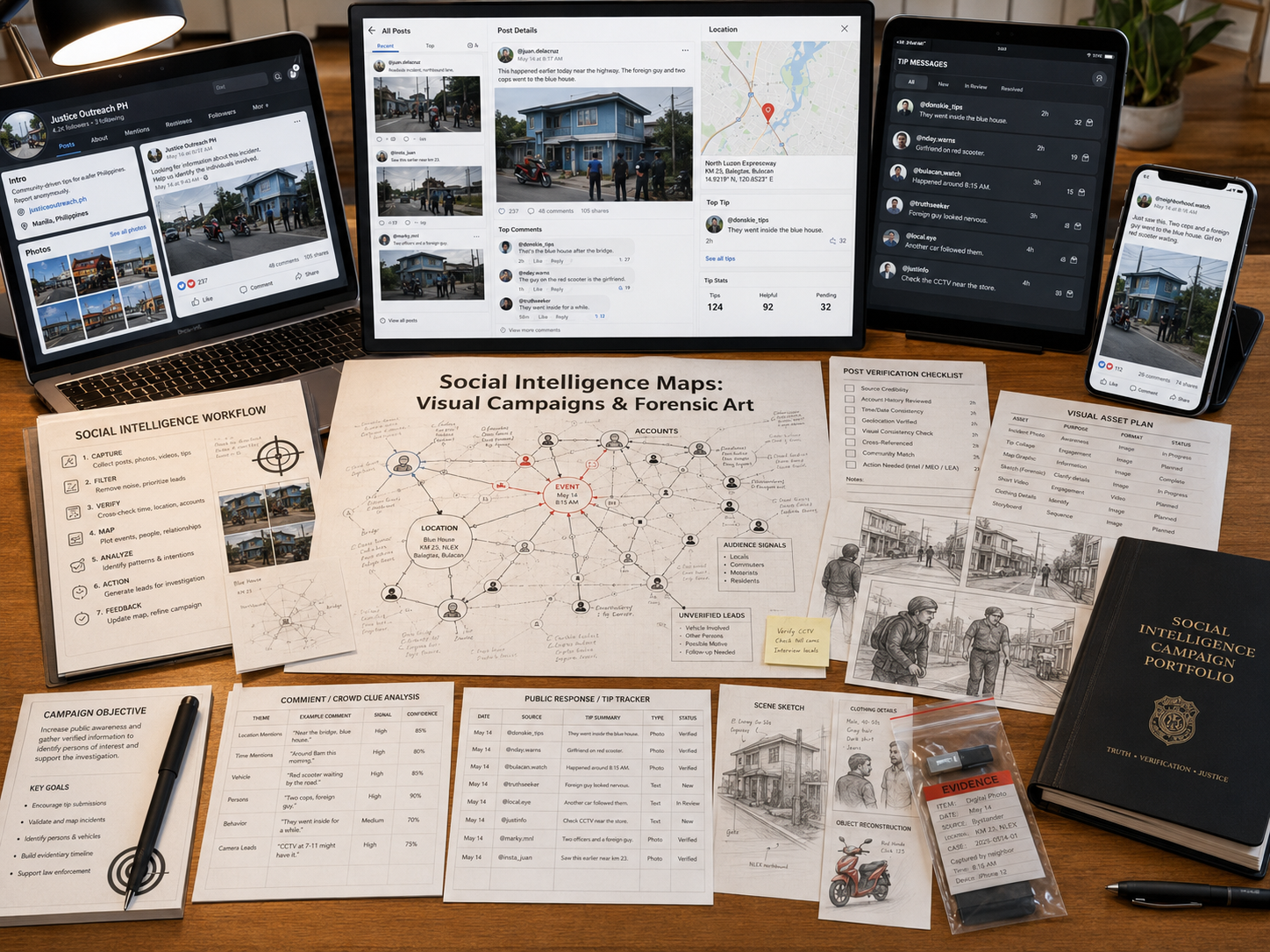
Build Social Intelligence Maps: Social Media Investigation & Visual Campaigns
Turn verified case information and handmade visuals into value-first, platform-native public communication without sacrificing source discipline.
Get Complete AccessVisual OSINT: Verify Evidence & Build Investigation Maps
Verify open-source information by making source, claim, location, chronology, corroboration, and uncertainty visible in one defensible visual chain.
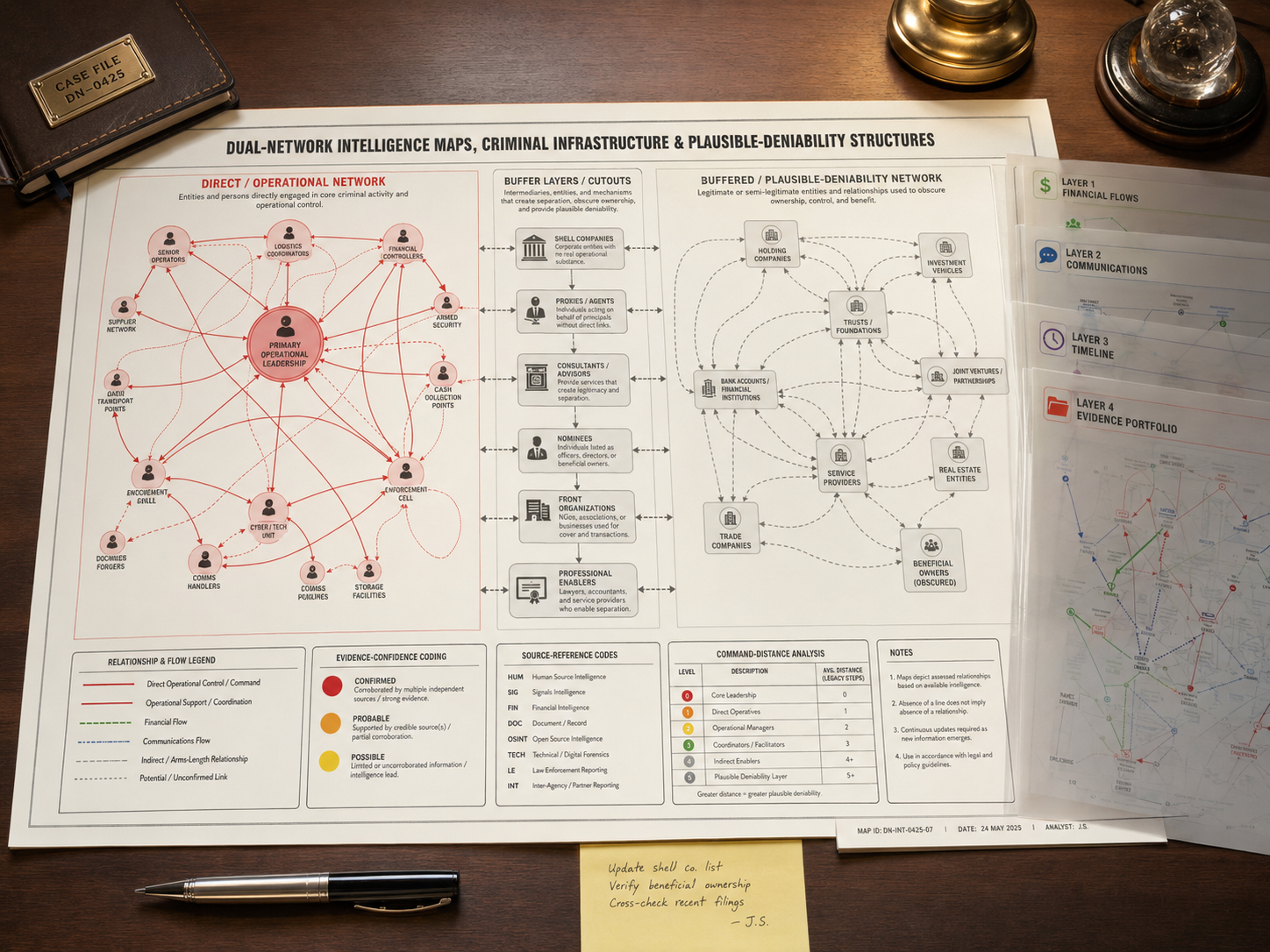
Get Complete AccessInvestigating Dual Networks: Mapping Government Access, Criminal Networks & Potential Culpability
Separate institutional channels, intermediary or buffer layers, and alleged non-state or criminal layers so the map shows what records establish, what is alleged, and where proof is missing.
Get Complete AccessPhase 3 — Witness Testimony, Victim Advocacy & Protective Intelligence Systems
Build ethical systems for witness documentation, protected disclosure, victim advocacy, and family-led investigation training.
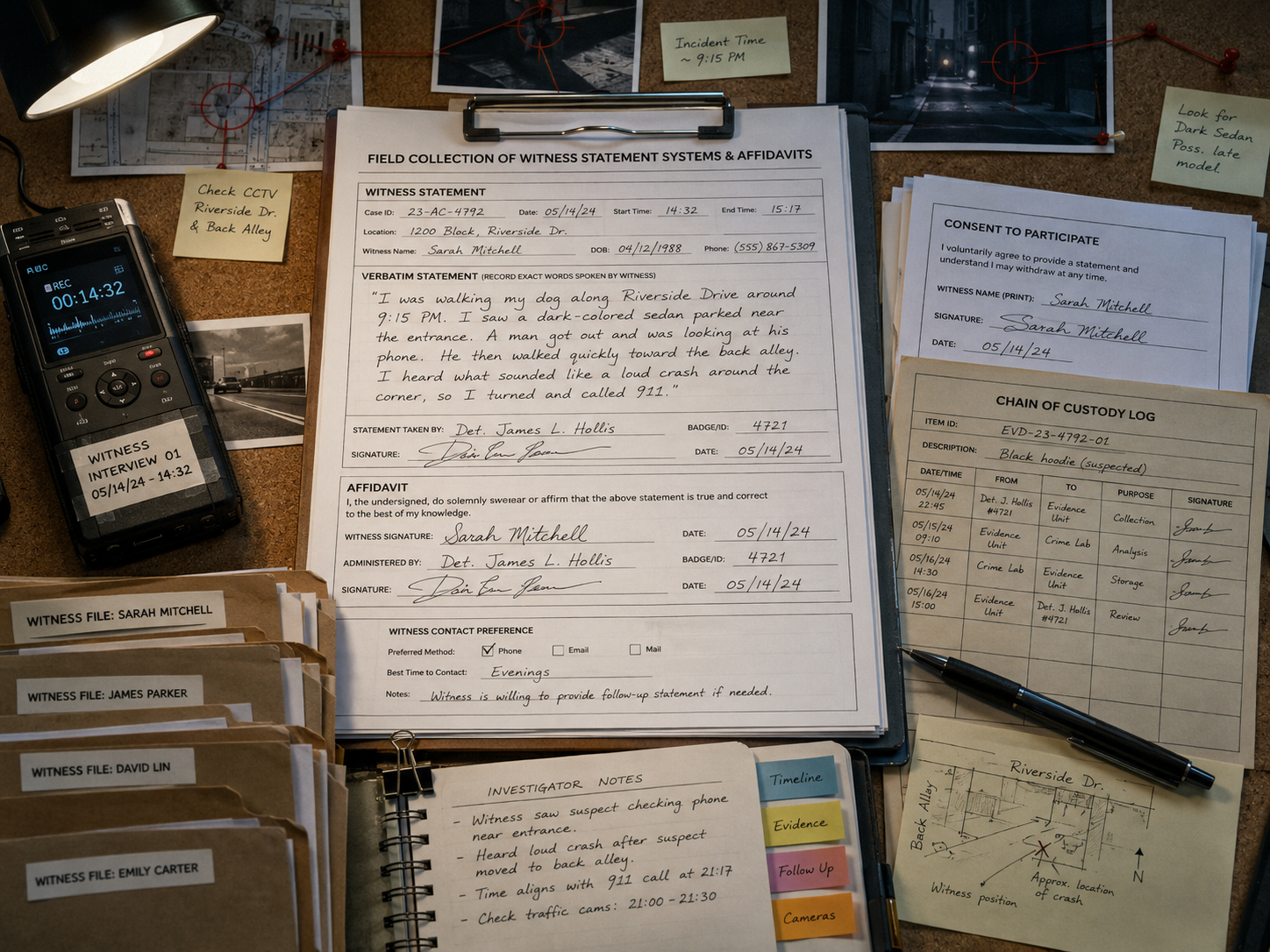
Collect Witness Statements & Build Affidavit Evidence Packages
Preserve human testimony without contamination: quote before summary, keep pauses and contradictions visible, and distinguish what the witness said from what the investigator observed.
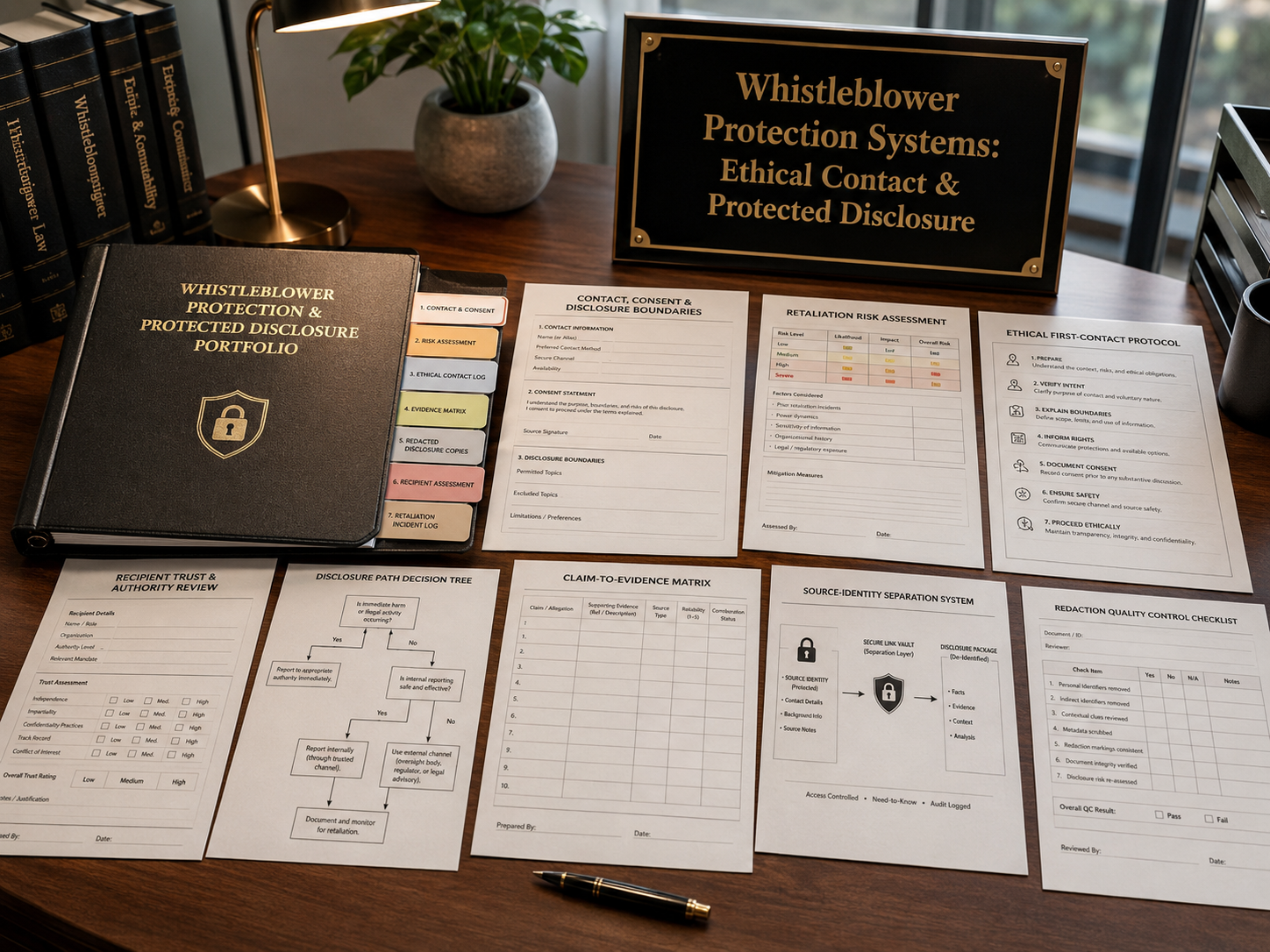
Get Complete AccessWhistleblower Protection: Ethical Contact, Risk Mapping & Redaction
Teach source protection by making consent, risk, staged disclosure, redaction, mosaic risk, and stop or re-contact rules physically visible.
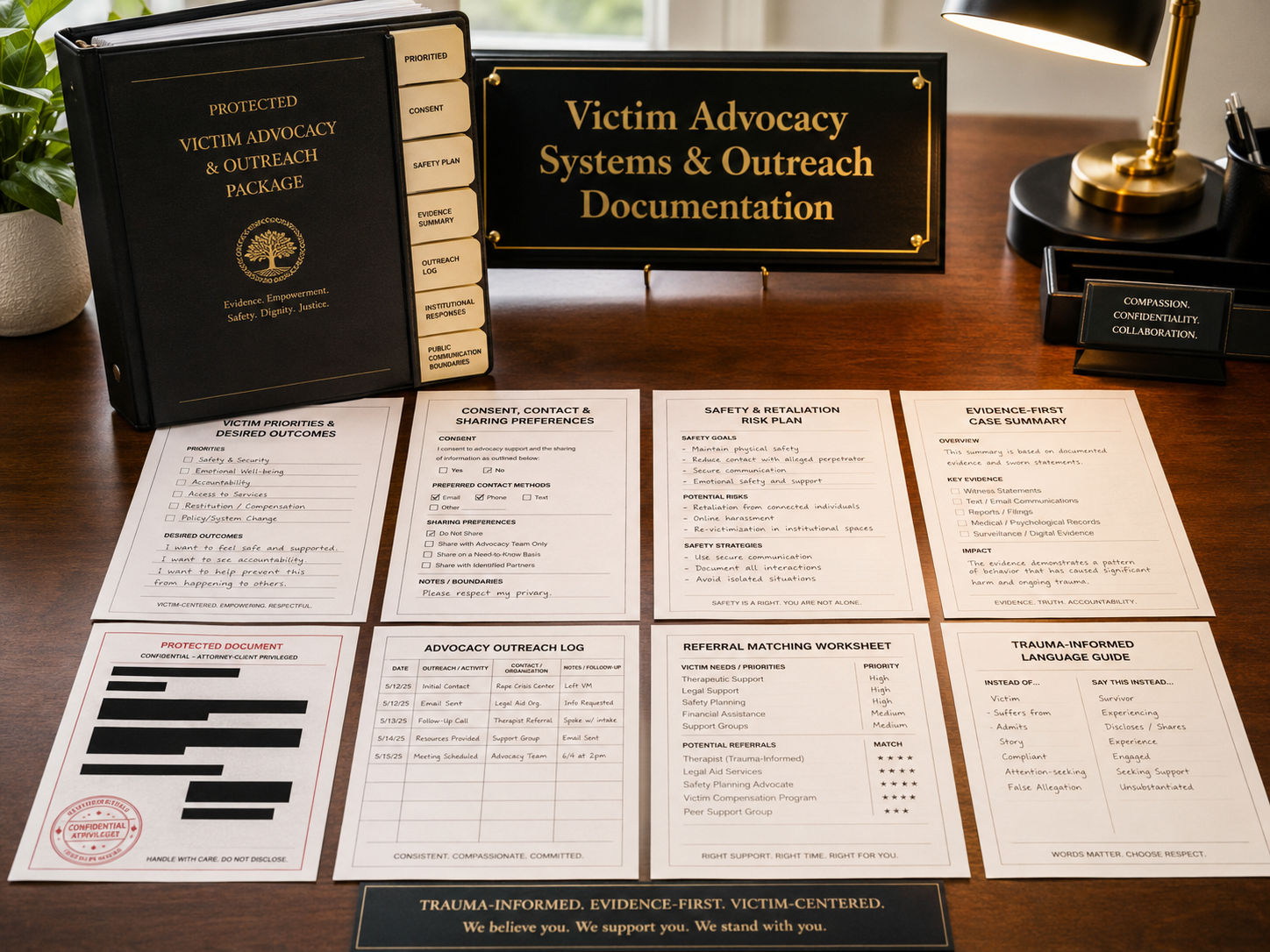
Get Complete AccessVictim Advocacy: Build Trauma-Informed Outreach & Documentation
Support survivors and families with dignity, consent, and clear factual organization—using beauty to reduce cognitive load, never to turn suffering into spectacle.
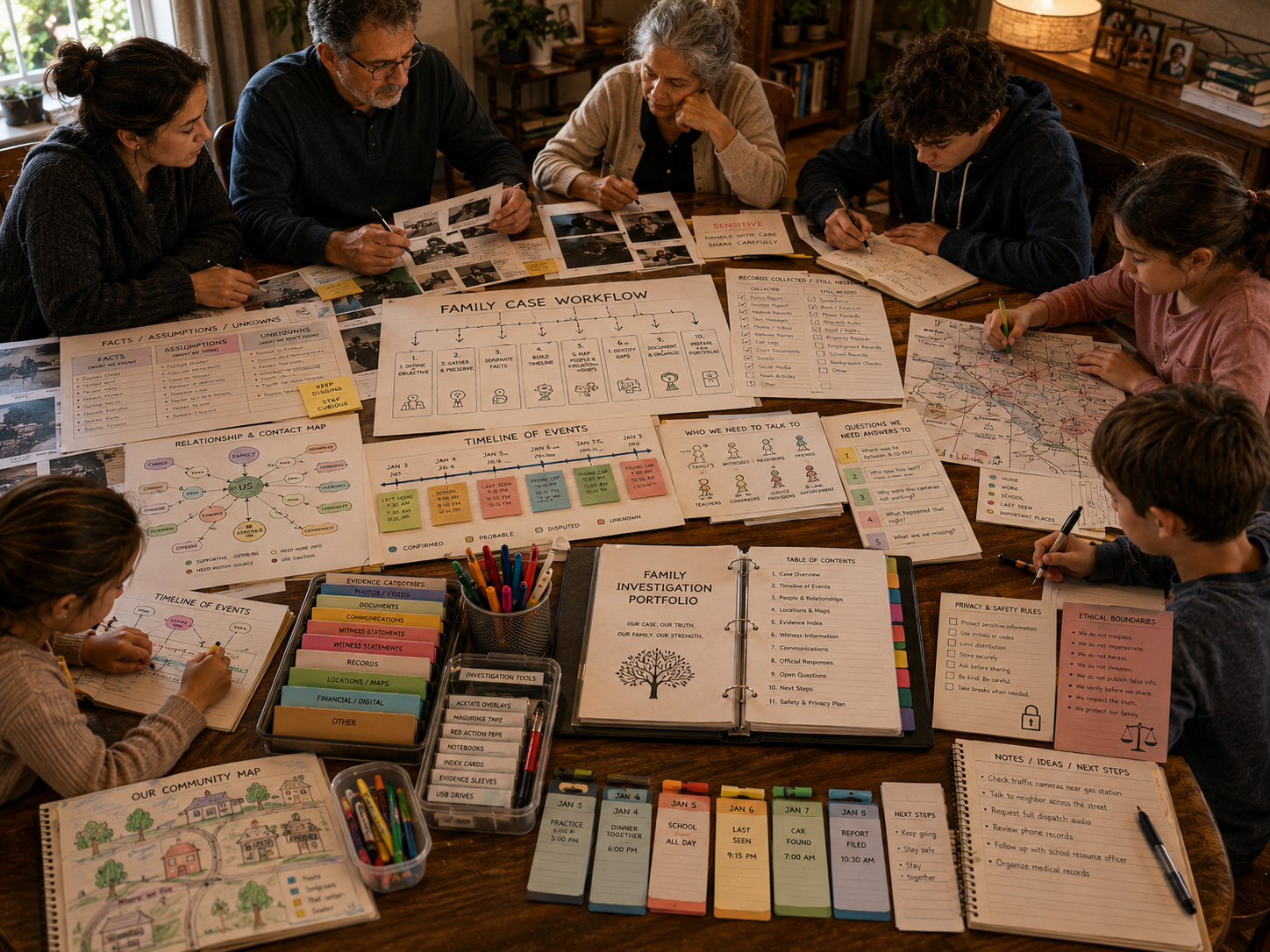
Get Complete AccessBuild Family Investigation Toolkits & Case Support Systems
Transfer capability instead of creating dependence: teach families a repeatable visual method, package it into a simple toolkit, and make the next step obvious.
Get Complete AccessPhase 4 — Media Operations, Public Accountability & Criminal Complaint Systems
Build public-facing accountability systems through media documentation, reward posters, tip-line workflows, disciplined public speaking, undercover field methods, and criminal complaint preparation.
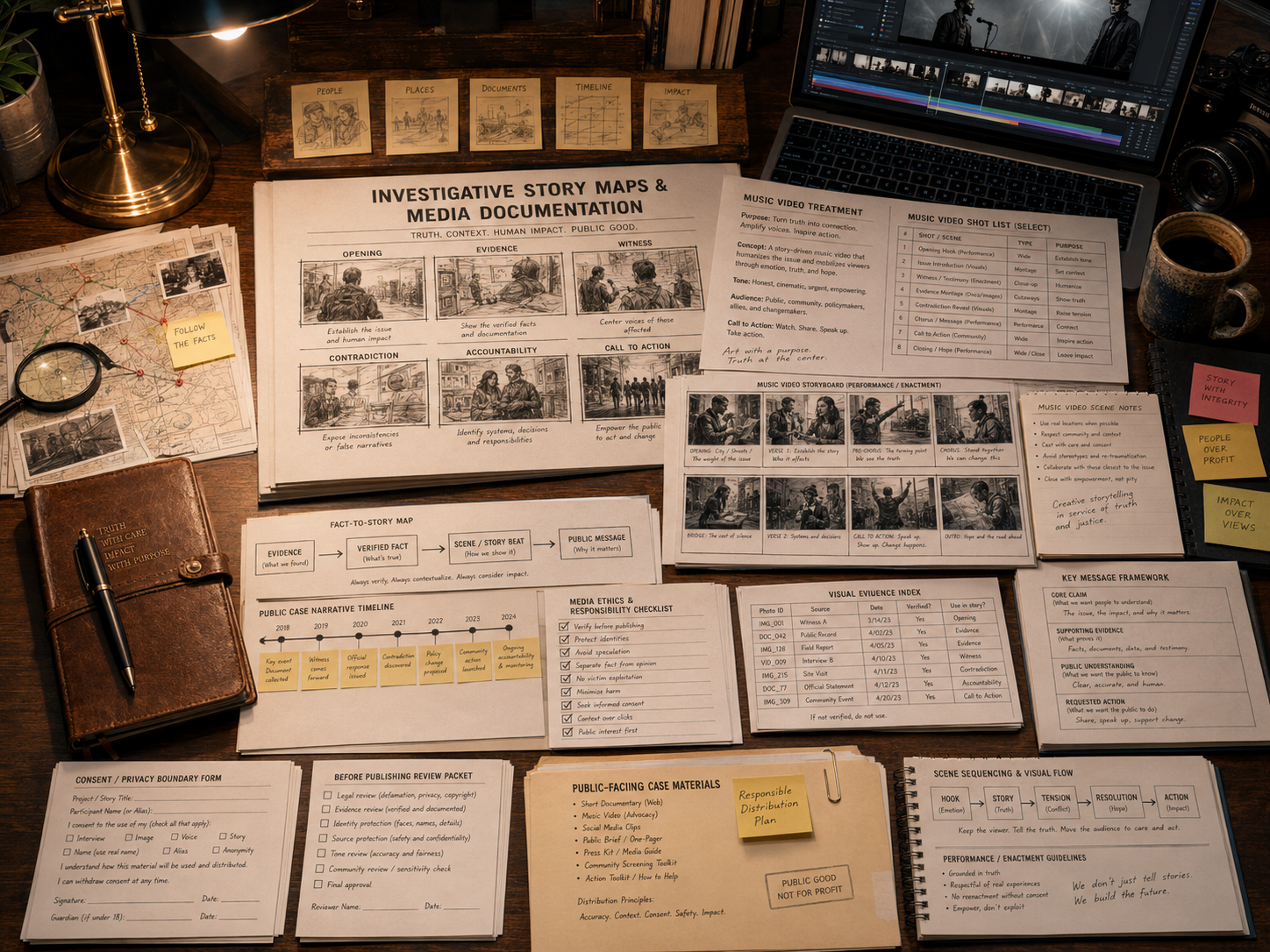
Build Investigative Story Maps & Media Documentation
Convert verified records into a frame-by-frame story structure without changing meaning; storyboard, captions, audio, and edits remain source-anchored.
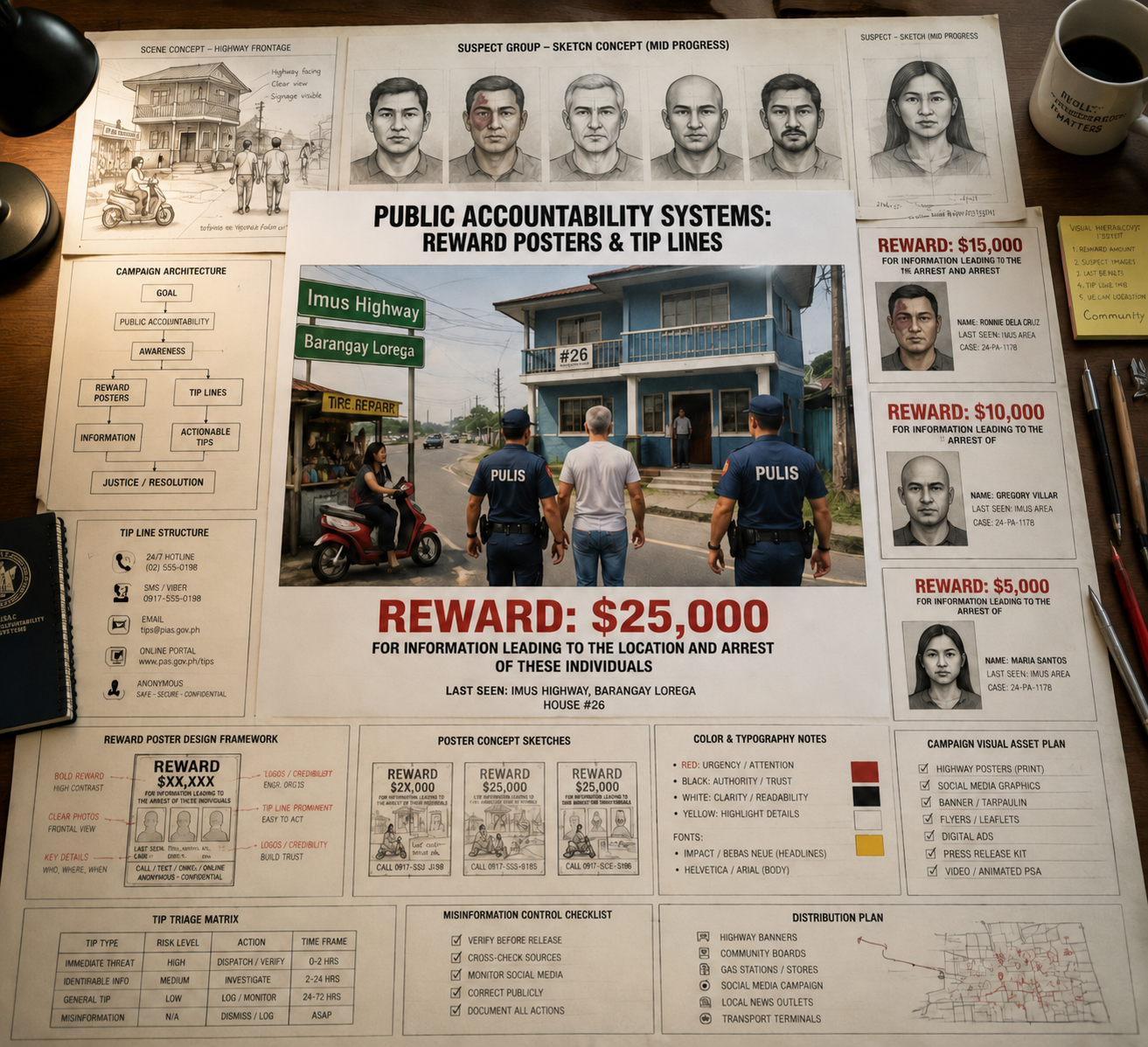
Get Complete AccessBuild Reward Posters, Tip Lines & Public Accountability Campaigns
Ask the public for one bounded piece of information using clear, non-accusatory materials, then design a tip path that separates useful leads from noise and urgent safety issues.
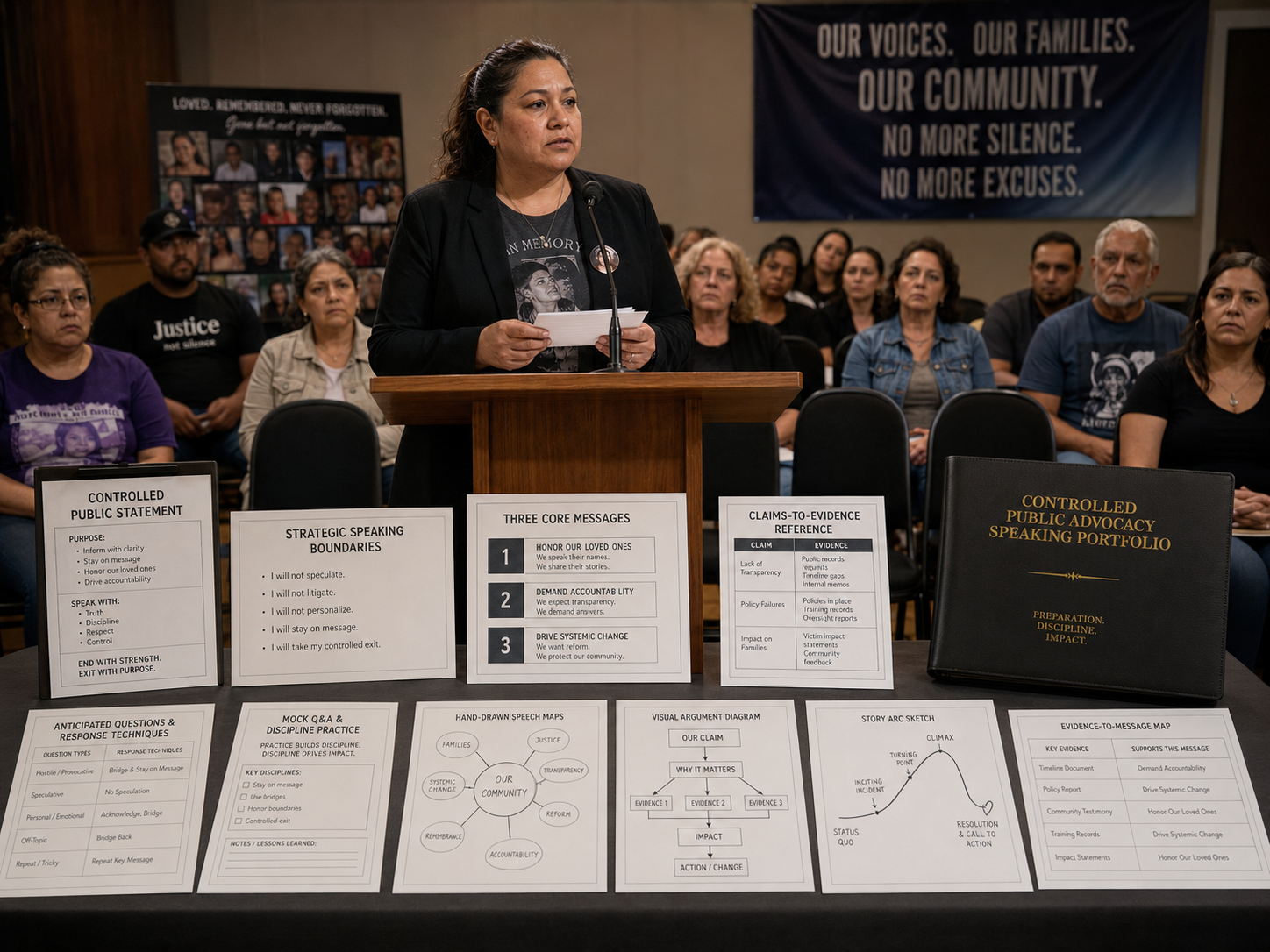
Get Complete AccessPublic Speaking for Investigators & Advocates: Statements, Q&A & Controlled Delivery
Build public speaking around purpose, verified facts, boundaries, and controlled exit so the speaker does not have to improvise beyond the record.
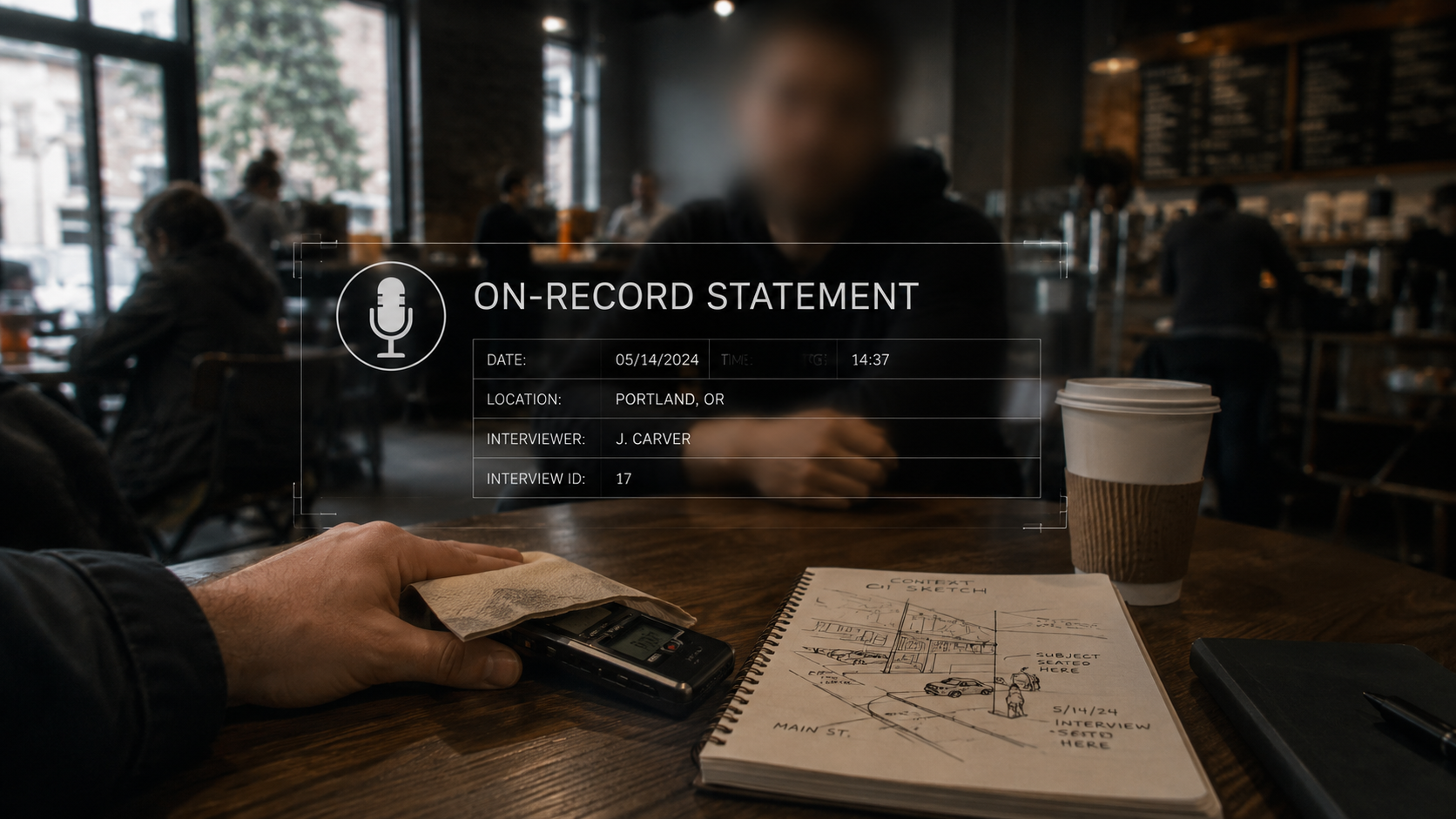
Get Complete AccessPublic-Interest Undercover Investigation: Field Recording, Observation & Evidence Integrity
Demonstrate that open, lawful methods were tried first, then teach ethical public-interest field documentation with context, corroboration, editing boundaries, and right-of-response review.
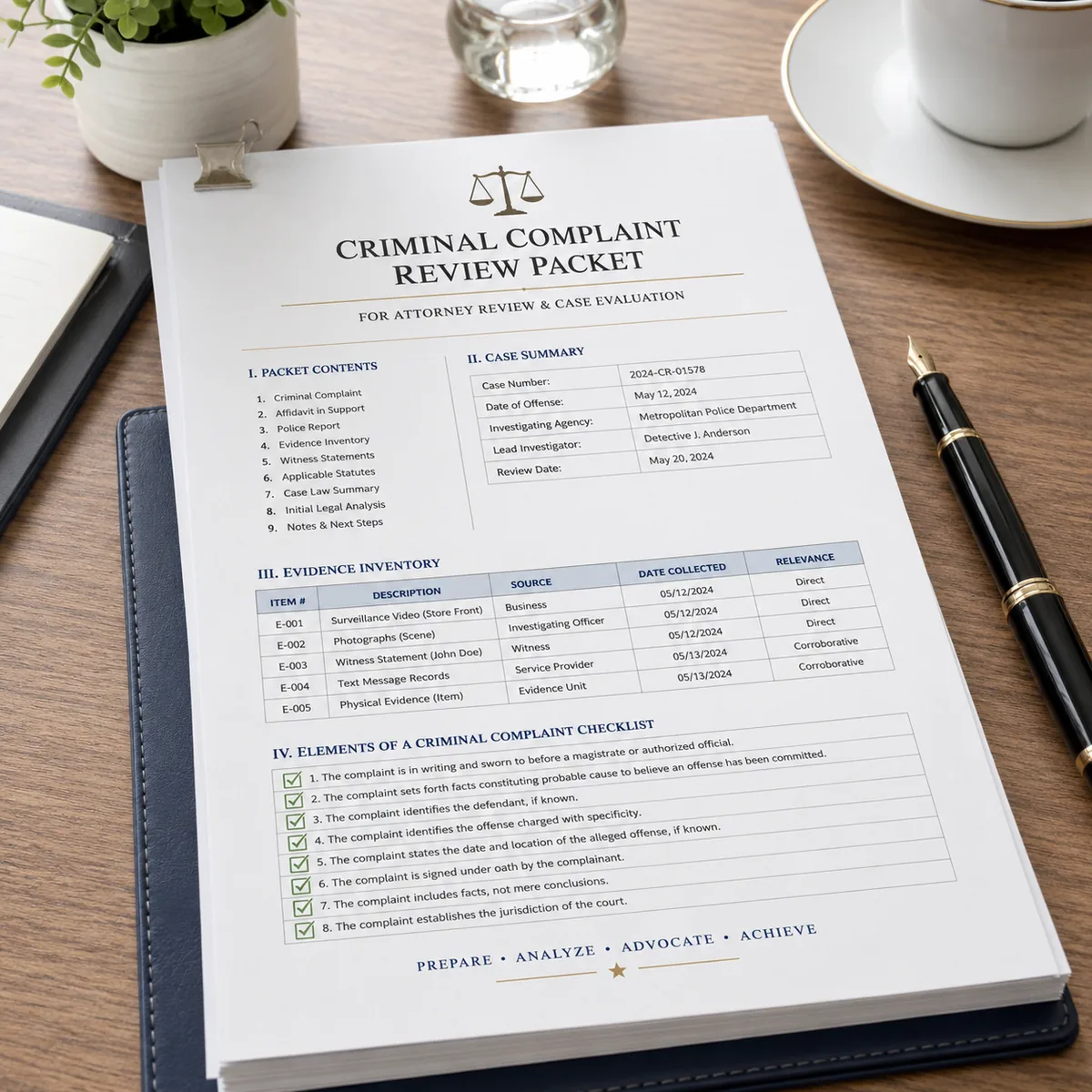
Get Complete AccessHow to Write a Strong Criminal Complaint
Translate a documented problem into reviewable legal architecture: rule or elements, fact-to-element mapping, jurisdiction, exhibits, uncertainty, and a clear decision not to file when the structure is not ready.
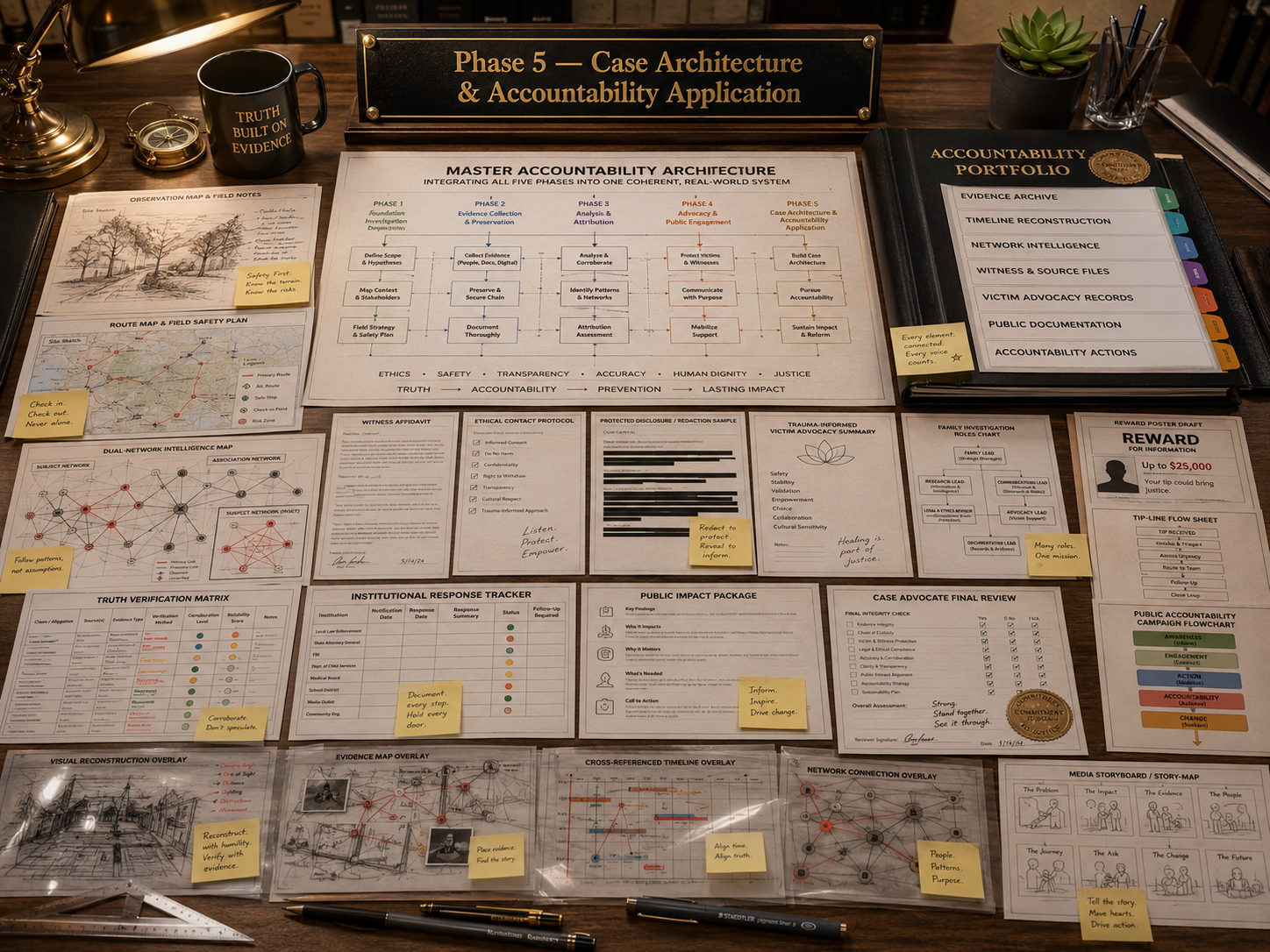
Get Complete AccessPhase 5 — Live Case Architecture
Integrate the full Drawn Evidence™ system into one Live Case Architecture. The Larry Margulies Accountability Project™ is the featured applied case inside the capstone.
The Drawn Evidence™ Capstone: Build a Live Case Architecture
Integrate source intake, visual reconstruction, chronology, networks, verification, human evidence, protection, advocacy, media, public accountability, complaint architecture, and final synthesis.
Get Complete Access